 English
 中文
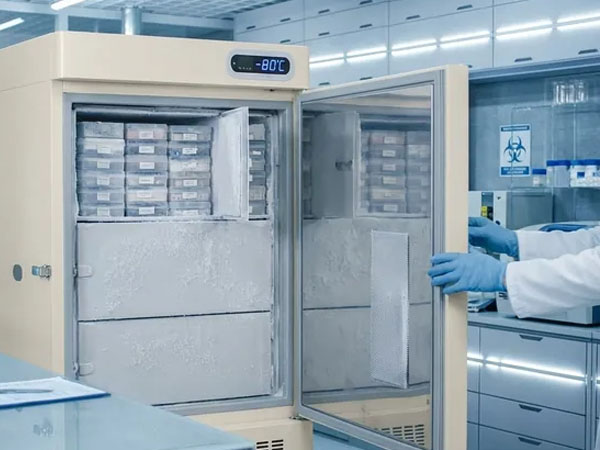
Labs depend on ultra-low-temperature freezers to keep biological samples, reagents and heat-sensitive materials safe. It's essential to maintain steady storage temperatures. What if Wi-Fi goes down, power fails, and there is no staff available to deal with alarms? For labs doing continuous temperature monitoring, solid data logging and quick alerts matter just as much as accurate readings. The Freshliance Coeus-4G real-time temperature data logger supports an optional ultra-low-temperature probe. It lets labs track freezer temperatures remotely and stay aware of conditions when unexpected disruptions take place.
1. Wi-Fi Failure Shouldn't Mean Losing Remote Visibility
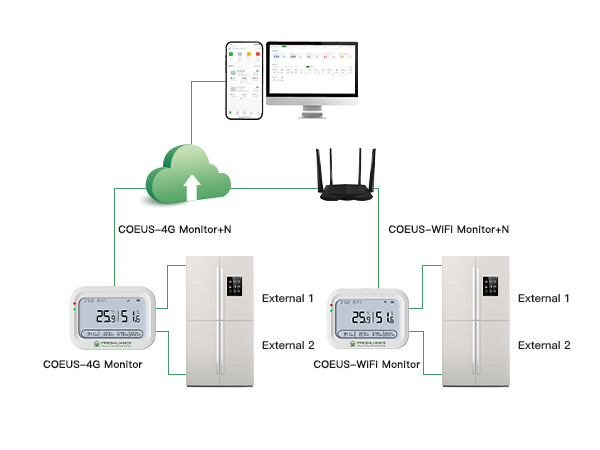
Many monitoring tools rely on a lab's local Wi-Fi. Once the network goes down, data transfer and remote access stop. The Coeus-4G real-time temperature data logger uses 4G cellular transmission to send data to Freshliance Cloud, independent of on-site Wi-Fi. If cellular connectivity drops, the device can cache up to 120,000 readings locally in a circular buffer. Once the link comes back, it uploads all saved data automatically. This keeps records intact and avoids gaps in monitoring logs.
2. Temperature Excursions Require Timely Alerts
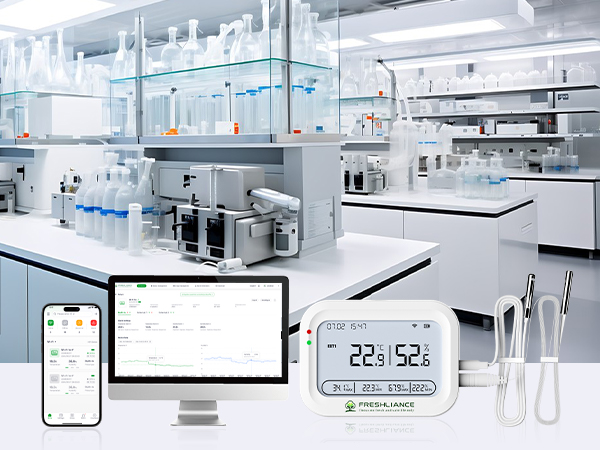
Lab team members are not always on-site. Temperature drift may go unnoticed until someone physically checks the freezer or reviews historical logs. The Coeus-4G wireless temperature monitor supports remote monitoring through the FreshLink mobile app and the Freshliance Cloud platform. Once readings go over preset temperature limits, alerts will be delivered via SMS, email and in-app push messages. With remote data access and alarm notifications, staff can spot risks and respond faster, even away from the lab.
3. Power Outages Shouldn't Automatically Interrupt Data Collection
A loss of external power raises concerns about whether the monitoring device can continue recording and communicating with the cloud. The Coeus-4G real-time temperature data logger comes with a built-in 2600 mAh rechargeable backup battery. It keeps the unit running when mains power fails. On a full charge, the backup battery can sustain up to 60 days of operation if data is uploaded every 15 minutes. Paired with 4G cellular connectivity, the logger continues monitoring through power outages, provided the battery still has charge and cellular signal is available.
Another important feature is its power-failure alert.
Even right after a blackout, the temperature inside −80℃ freezers may not shift immediately. Still, teams need immediate notice that mains power has failed. When external power is cut and the logger switches over to battery mode, the Coeus-4G IoT temperature logger sends a “POWER Failure” alert so staff can learn about the outage quickly.
4. Choosing the Right Probe Matters at −80℃
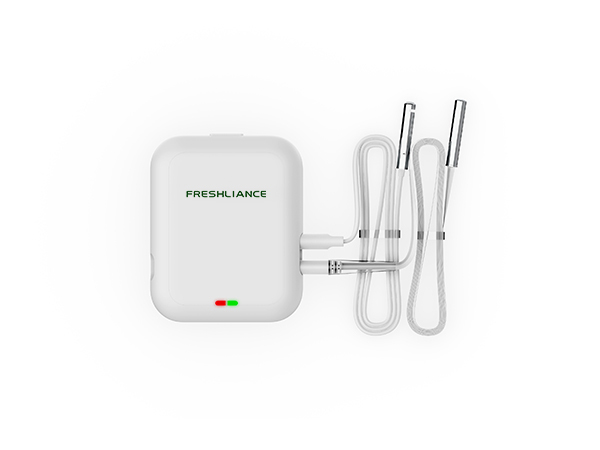
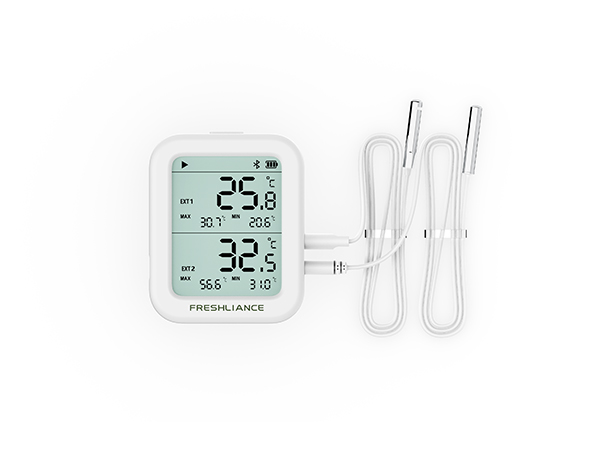
For this application, you must select a probe built for ultra-low temperatures. It needs reliable accuracy and proper calibration paperwork to fit lab compliance rules. The Coeus-4G IoT temperature logger supports up to two optional external probes. One available option is an ultra-low-temperature probe with a range of −90℃ to +200℃, which fully covers the working range required for −80℃ freezer temperature monitoring.
Labs following formal quality protocols also need to check calibration documents for the logger and probe set they use. Freshliance supplies a standard QC certificate, and users can request an optional NIST-traceable calibration certificate. Picking the correct probe and validating its specs helps ensure the whole monitoring setup meets lab requirements.
Keep Your Laboratory Monitoring Connected
Good −80℃ freezer monitoring is far more than just taking temperature measurements. It also needs stable data transfer, fast alarm delivery, continuous operation during power loss, and a probe suited for extremely low temperatures. Equipped with 4G transmission, cloud monitoring, remote alarms, local data buffering and rechargeable backup power, the Freshliance Coeus-4G real-time temperature monitoring system for labs ultra-low-temperature storage.
Looking for a monitoring solution for −80℃ laboratory freezers? Reach out to Freshliance to talk through probe options, battery runtime, alarm setup and your lab's specific monitoring needs.toring requirements of your laboratory.