 English
 中文
中文In high-volume hen egg incubation, we’ve perfected the "Big Two"—Temperature and Humidity. But the industry leaders who are consistently hitting peak hatchability rates are focusing on the third pillar: Carbon Dioxide (CO₂) Dynamics. Managing CO₂ isn't just about ventilation; it’s about biological timing.
The Biological Challenge
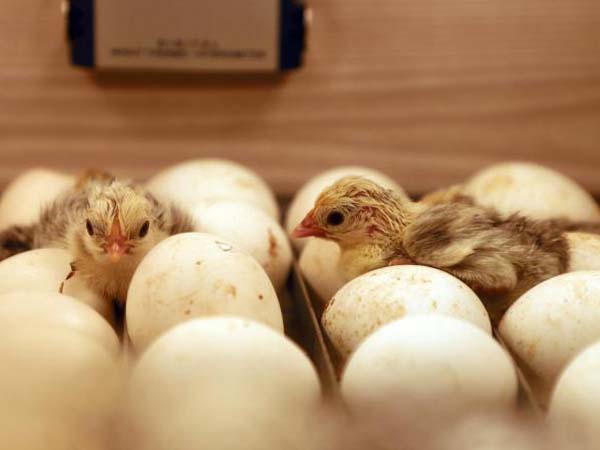
The embryo's needs are a moving target. For the first 17 days, the goal is gas exchange stability, keeping levels near ambient (~400 ppm). However, from Day 18 onward, the game changes. As the chick transitions to lung breathing (internal pipping), a controlled rise in CO₂ to 4,000–6,000 ppm is actually beneficial—it acts as a physiological trigger for the hatching process.
The danger zone? During peak pipping, levels can hit 5-6%. Without precise, real-time data, you are essentially flying blind during the most critical 72 hours of the cycle.
The Professional Approach: GSP100-WIFI Integration
Freshliance designed the GSP100-WIFI real-time data logger to replace guesswork with high-fidelity environmental data. Here is how it changes the workflow in the setter and hatcher rooms:
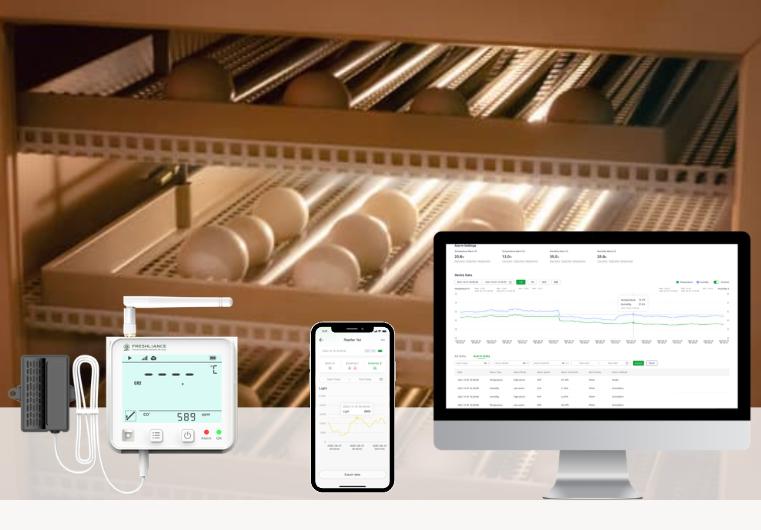
Integrated Multi-Sensor Logic: Tracking temp, humidity, and CO₂ on a single time-aligned graph. This allows you to see exactly how ventilation adjustments to lower CO₂ are impacting your humidity retention.
WIFI-Enabled Oversight: Large hatcheries can be "dead zones" for data. The GSP100-WIFI real-time data logger pushes real-time metrics to your dashboard, allowing managers to oversee multiple incubation rooms without physically entering and disturbing the micro-climate.
Reliable Performance Under Load: The final 72 hours of incubation push environmental sensors to their limit. The GSP100-WIFI real-time data logger is engineered with a wide-range CO₂ sensor that remains functional during the intense 5,000–6,000 ppm peaks—and even the temporary 5% spikes—that occur during pipping. It gives you a clear picture of the gas exchange when standard air quality loggers might fail to provide actionable data.
Risk Mitigation & Audit Trails: If a ventilation fan fails or a damper sticks at 2:00 AM, the automated alerts act as your first line of defense. Plus, you get a "birth certificate" of data for every batch, proving that GSP (Good Storage Practice) standards were met from set to hatch.
Efficiency & Economic Gains
By tightening your control over the CO₂ curve, you aren't just improving hatch percentages; you’re improving chick quality. Better CO₂ management leads to more uniform hatch windows and stronger "Day 1" chicks with better cardiovascular development.
If you’re still relying on manual spot-checks or outdated sensors that can't handle the pipping spike, it’s time to upgrade your visibility.