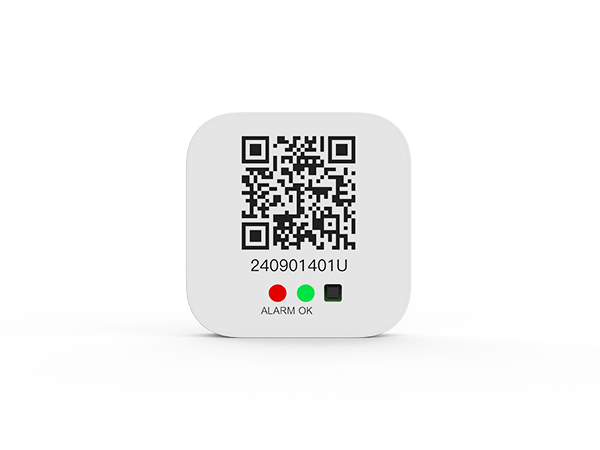
Optimize Incubator Environmental Monitoring with Real-Time Data Loggers
If you've ever walked into the lab on a Monday morning to find a batch of dead cells, you already know the problem. Incubator wall displays tell you what's happening right now—but they don't tell you what happened at 2 a.m. on Saturday when the CO2 tank ran low, or whether someone left the door ajar for twenty minutes during Friday's cell passaging session. These gaps are where experiments quietly fail. And the alternatives are usually either expensive built-in monitoring systems from the incubator manufacturer, or third-party platforms that charge you a yearly subscription fee. Neither is great. In this case, the Freshliance GSP100-4G, which is a real-time environmental data logger, would be the best choice for this kind of scenario.
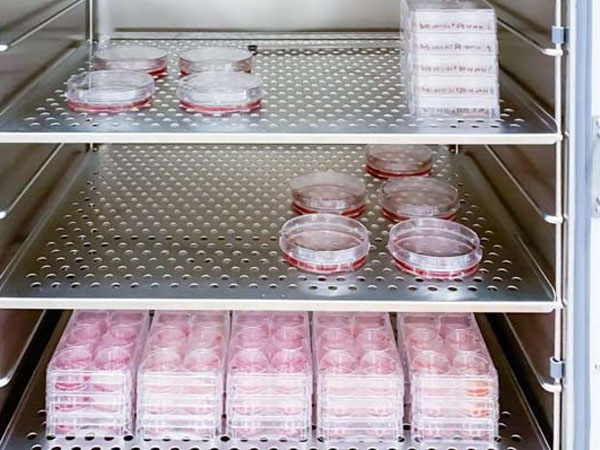
How the GSP100-4G Actually Works Inside a Cell Culture Workflow?
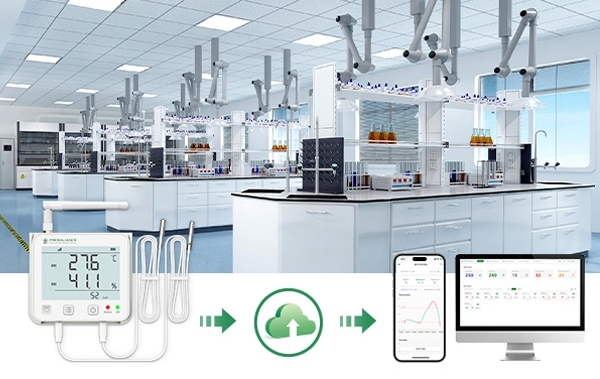
The Freshliance GSP100-4G is a real-time data logger ideal for incubator environmental monitoring. Here's how it maps to a typical CO2 incubator: The main unit sits outside the chamber. It houses a built-in ambient light sensor (0–60,000 Lux) and connects wirelessly via 4G to the cloud platform. Two external probe ports come off the main body—one for a temperature/humidity probe, one for a gas probe (CO2, in this case). Both probes run through the incubator's access port into the chamber interior.
The main unit stays outside the incubator. It sits on the bench or gets mounted on the wall next to it. It has a built-in light sensor, 0 to 60,000 Lux range.
There are two probe ports on the main device. One is for a temperature and humidity probe. The other is for a gas probe. You can only connect one gas probe. For incubator use, that's going to be your CO2 probe.
Why do it this way? Because inside the incubator it's like 95% RH or higher. Sometimes basically 100%. If you put a circuit board in there for weeks or months, you're going to get problems. Corrosion on the connectors, drift in the sensors, eventually failure. The probes are designed to be in wet environments. The main unit is not. So keep the main unit dry and only put the probe tips inside.
What each probe does
The CO2 probe reads gas concentration inside the chamber. Cell culture media needs about 5% CO2 to keep pH stable. If CO2 drops, pH goes up, and your cells start dying. This can happen because someone opened the door, or because the gas tank is running low, or because the regulator has a slow leak. The probe picks all of this up and the system sends you an alert. You can configure alerts to go out as SMS, or as a push notification through the app, or as email.
The other probe handles temperature and humidity. The temperature range is optional from -90°C to +200°C; humidity covers 0% to 100% RH with ±3% RH accuracy at 25°C in the 20%–80% RH band and ±5% RH outside of it. A 37°C incubator sitting at around 95% RH lands in that ±5% zone, which is still workable for catching the things that actually matter here, like humidity creeping up until you get water pooling on shelves, or a temperature dip after someone opens the door that lingers longer than it should.
The light sensor is built into the main unit. Since the main unit is outside the incubator, this sensor is not measuring light inside the chamber. It measures ambient light in the room around the incubator. The main use case here is detecting door-open events. If someone leaves the door open, light levels change near the unit, and if you've set a threshold, you get an alert. People working with light-sensitive materials might find this useful as a secondary indicator.
Power and data continuity
The real-time data logger is powered by Type-C. It has a 2,600 mAh lithium battery inside. You can choose to have one or two battery cells depending on how long you need it to run without external power.
If Wi-Fi goes down or power goes out, the device doesn't stop recording. It stores data locally on its internal memory. When the connection comes back, it uploads everything. So you don't end up with gaps in your data. You don't have to manually merge files or worry about losing weekend data.
Cost
It's a thing that surprises people. The cloud platform and the app are free. No subscription. You get two years of data storage included. You can export reports as PDF or CSV. There's no gateway device you need to buy separately. You buy the GSP100-4G real-time environmental data logger and that's it. No recurring fees.
A lot of competing products in this space charge you monthly or annually for software access. Some of them require you to buy their gateway hardware too. This one doesn't.
If you're running CO2 incubators and you're tired of checking the display manually and hoping nothing went wrong overnight, this is a pretty straightforward solution. CO2, temperature, humidity, light events, power status. All logged continuously. Alerts go to your phone. No subscription. No gateway. Just the device and the probes.